

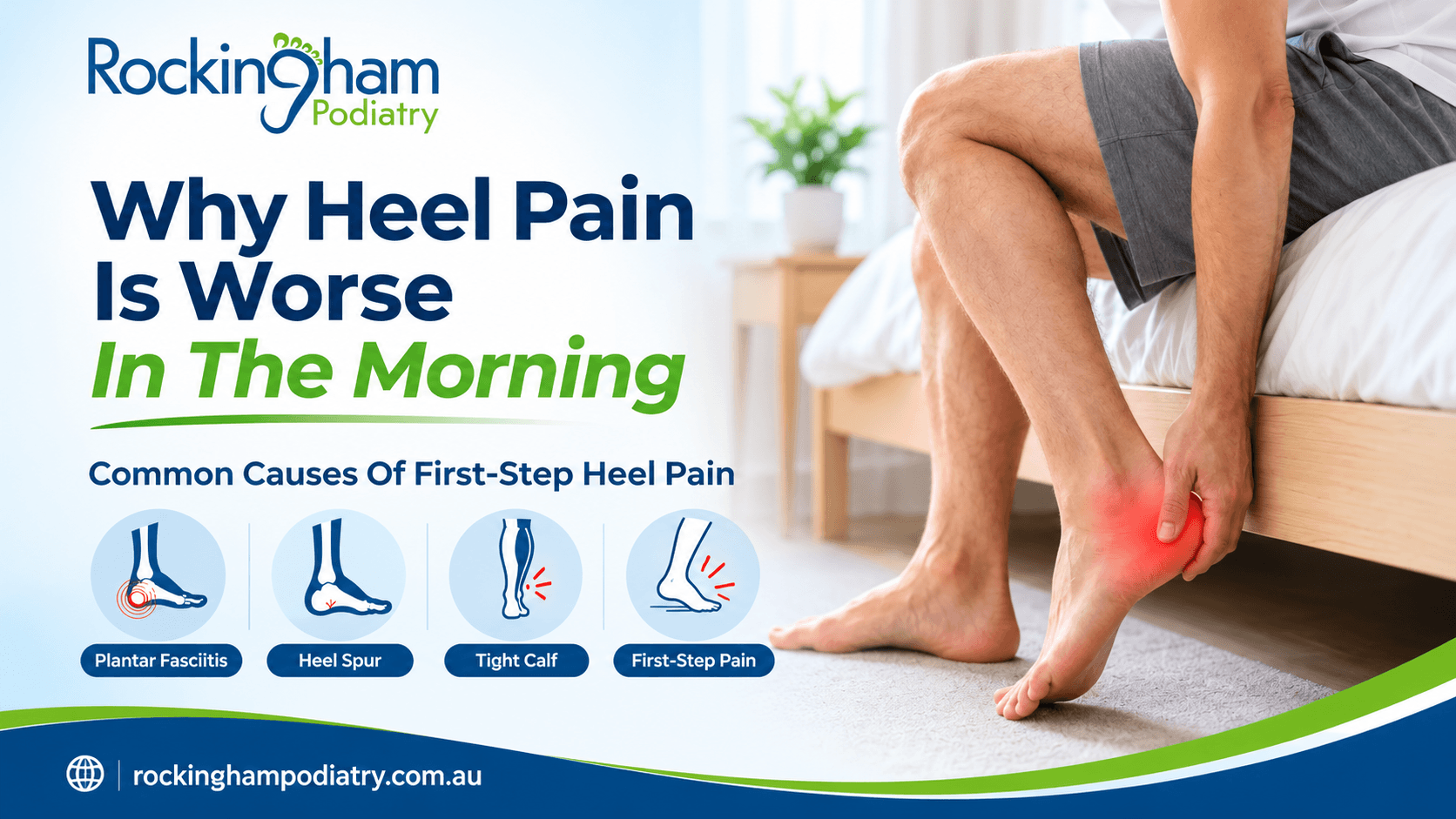
Heel pain is often worst in the morning because the plantar fascia (the thick band under your foot) and your calf and Achilles tendon tighten while you sleep. Your first steps suddenly stretch and load them, which can cause sharp heel pain that eases as you move. The most common cause is plantar fasciitis.
If you wince every time you step out of bed, you are not alone. Our podiatrists have been treating heel pain in Rockingham since 1987, and sore heels first thing in the morning are one of the most common problems patients describe. This pattern tells us a lot about what is going on, and most cases can be managed well once the cause is clear.
Why does heel pain hurt most with the first steps of the day?
When you sleep, your feet usually rest with the toes pointed down. This lets the plantar fascia, calf muscles and Achilles tendon shorten and stiffen. When you stand, these tissues are stretched and loaded all at once. If they are already irritated or overloaded, the result is a sharp or stabbing pain in the heel.
As you walk, the tissues warm up and loosen, so the pain often settles within a few minutes. The same thing can happen when you stand up after sitting for a long time at a desk, in the car or on the couch, which is why many people describe pain that comes and goes through the day.
What conditions cause morning heel pain?
Plantar fasciitis is the most common culprit, but it is not the only one. Telling them apart matters because treatment differs.
- Plantar fasciitis: pain under the heel, often towards the inside, worst with the first steps after rest and tender when you press the area.
- Achilles tendon problems: stiffness and soreness at the back of the heel or just above it, often with a thickened tendon.
- Heel fat pad irritation: a deep, bruise-like ache in the centre of the heel that is worse on hard surfaces.
- Nerve irritation: burning, tingling or shooting pain, sometimes with numbness.
- Heel stress fracture: pain that builds with weight-bearing through the day rather than easing, and is often sore when the heel is squeezed.
- Inflammatory conditions: heel pain in both heels with prolonged morning stiffness (more than about 30 minutes) or pain in the back or other joints should be checked by your GP.
A heel spur is often blamed, but many people have spurs without any pain, and many people with plantar fasciitis have none. The irritated soft tissue is usually the real source of pain.
Who is more likely to get it?
Morning heel pain is more common if you:
- Have tight calf muscles or limited ankle movement
- Have recently increased your walking, running or sport
- Spend long hours on your feet on hard surfaces
- Wear flat, worn-out or unsupportive footwear, or go barefoot on tiles
- Carry extra body weight
- Have a very flat or very high arch
It can affect anyone from weekend walkers along the Rockingham foreshore to tradies, nurses, teachers and retirees.
What can you do at home?
Self-care helps many people in the early stages:
- Stretch before you stand. Before your feet touch the floor, pull your toes and ankle up towards you and hold for 20 to 30 seconds. Repeat three times.
- Put on supportive footwear straight away. Avoid hobbling barefoot across hard floors first thing.
- Stretch your calves a few times a day, and again after exercise.
- Adjust, don’t stop. Reduce the activity that aggravates your heel, then build back gradually.
- Check your shoes. Worn soles and flat, flimsy footwear can keep the pain going.
If your pain isn’t improving after a couple of weeks, it is time to get it assessed rather than push through.
When should you see a podiatrist?
Book an assessment if your heel pain:
- Has lasted more than two to three weeks
- Keeps returning or is getting worse
- Affects your walking, work or exercise
- Is in both heels, or comes with stiffness in other joints
See a doctor promptly if you have heel pain after an injury, significant swelling, redness or warmth, numbness, fever, or pain at night. If you have diabetes, a new foot problem should always be checked early.
How do podiatrists treat morning heel pain?
The first step is a proper diagnosis. Our heel pain treatment starts with a thorough assessment of your foot structure, walking pattern, footwear, activity levels and calf flexibility, so treatment targets the actual cause rather than just the symptoms.
Depending on what we find, your plan may include:
- Stretching and strengthening exercises for the plantar fascia, calf and foot
- Load management and activity advice
- Taping, footwear changes or custom orthotics
- Hands-on therapies such as dry needling or joint mobilisation where appropriate
For heel pain that has lingered for months and hasn’t responded to other care, shockwave and laser therapy may be an option. These treatments are usually used alongside exercises and footwear changes rather than on their own, and results vary from person to person.
Frequently asked questions
Is it normal for heel pain to ease after walking around?
Yes. This is a classic pattern of plantar fasciitis. The tissue warms up and loosens with movement. Even so, pain that repeats every morning is a sign something needs attention.
Can morning heel pain go away on its own?
Some mild cases settle with rest from aggravating activity, stretching and better footwear. Persistent heel pain often needs targeted treatment, and the sooner you start, the less likely it is to become long-standing.
Does morning heel pain mean I have a heel spur?
Not necessarily. Heel spurs are common and frequently painless. An assessment can work out whether your pain is coming from the plantar fascia, the Achilles, the fat pad or something else.
How long does it take to recover?
That depends on the cause, how long you have had it and how well it is managed. Many people improve over several weeks to a few months with the right plan, while stubborn cases can take longer.
Get your heel pain checked in Rockingham
You don’t have to put up with painful mornings. Rockingham Podiatry has been caring for local feet since 1987, with NDIS, DVA and Medicare patients welcome. Visit us at 12 Leghorn Street, Rockingham WA 6168, open Monday to Friday, 8:20am to 5pm, or call 08 9592 1068 to book an appointment.
This article is general information and is not a substitute for individual medical advice. If you are unsure about your symptoms, see a health professional.